✦ Back cover ✦
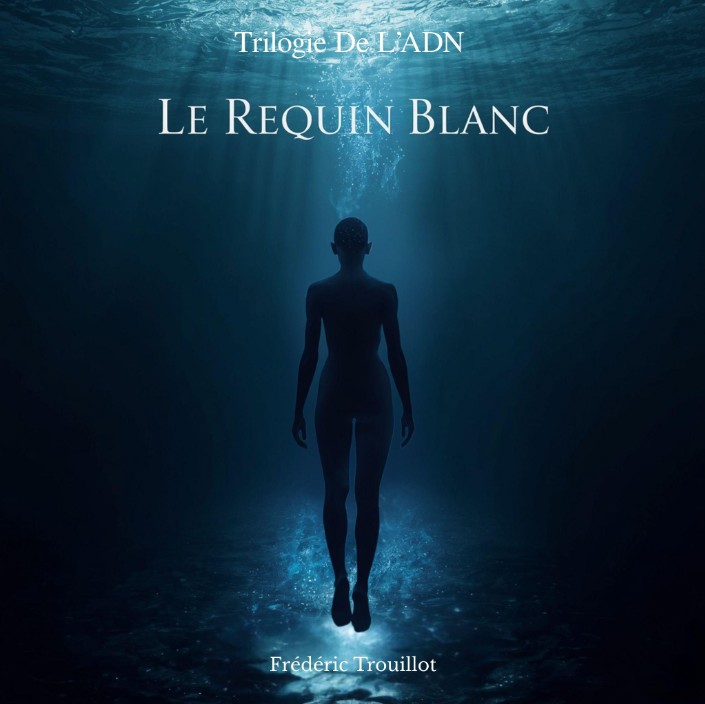
Le Requin Blanc — Book I
Vancouver, 2018. Professor Charles Harris, a sixty-three-year-old geneticist at the 4BIOSCE laboratory, finds in two cores taken from Greenland and southern Chile a DNA sequence that should not exist: thirty percent marine mammal, thirty percent carnivorous plant, forty percent human. Stable over twenty-five thousand years. Undegraded. Listed in no database in the world.
As he begins to understand what he has found, a young doctoral student named M'zin arrives in his laboratory. He knows all his work. He does not eat in the canteen. And nothing seems to surprise him.
Meanwhile, five hundred people in forty-two countries have lived through the same experience: emptied of something unnameable after an encounter of an intensity none of them can describe, leaving in their wake a scent of jasmine and cherry blossom.
And now, in Vancouver, people are dying.
At the center of it all, something that has been alive for 128,000 years and has decided the old man can be useful.
Le Requin Blanc is a novel about what survives the centuries, about what is passed on and what is lost in the passing. About a predator who never wanted to be one. About a researcher who understands, too slowly then too fast, that he has long been searching for something that was waiting for him.
And about the difference between being chosen and being noticed. They are not the same thing.
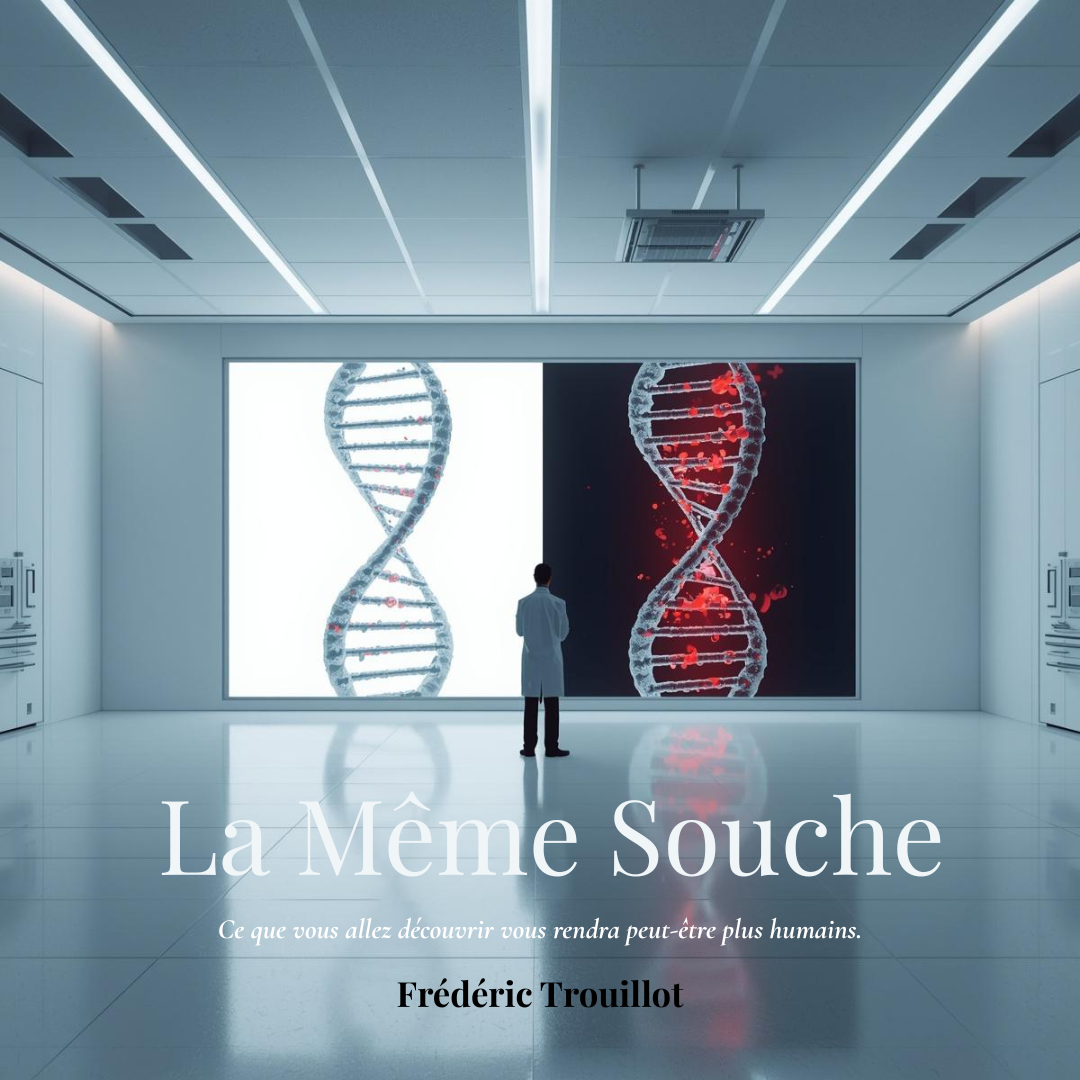
La Même Souche — Book II
Vancouver, 2052. The thawing permafrost has released something asleep for one hundred and fifty million years. Not a virus. Not a catastrophe. A mechanism.
Jean-Patrick Langstone discovers that two million people carry an unknown signature in their DNA. Ancient. Present in the human species for at least forty-five thousand years. Structurally linked to the spore. He calls it the same strain. His children carry it. He does not.
La Même Souche is a novel about the end of one world and the beginning of another. About what a species leaves behind when it transforms. And about a father who documents, to the very end, what he cannot cross.
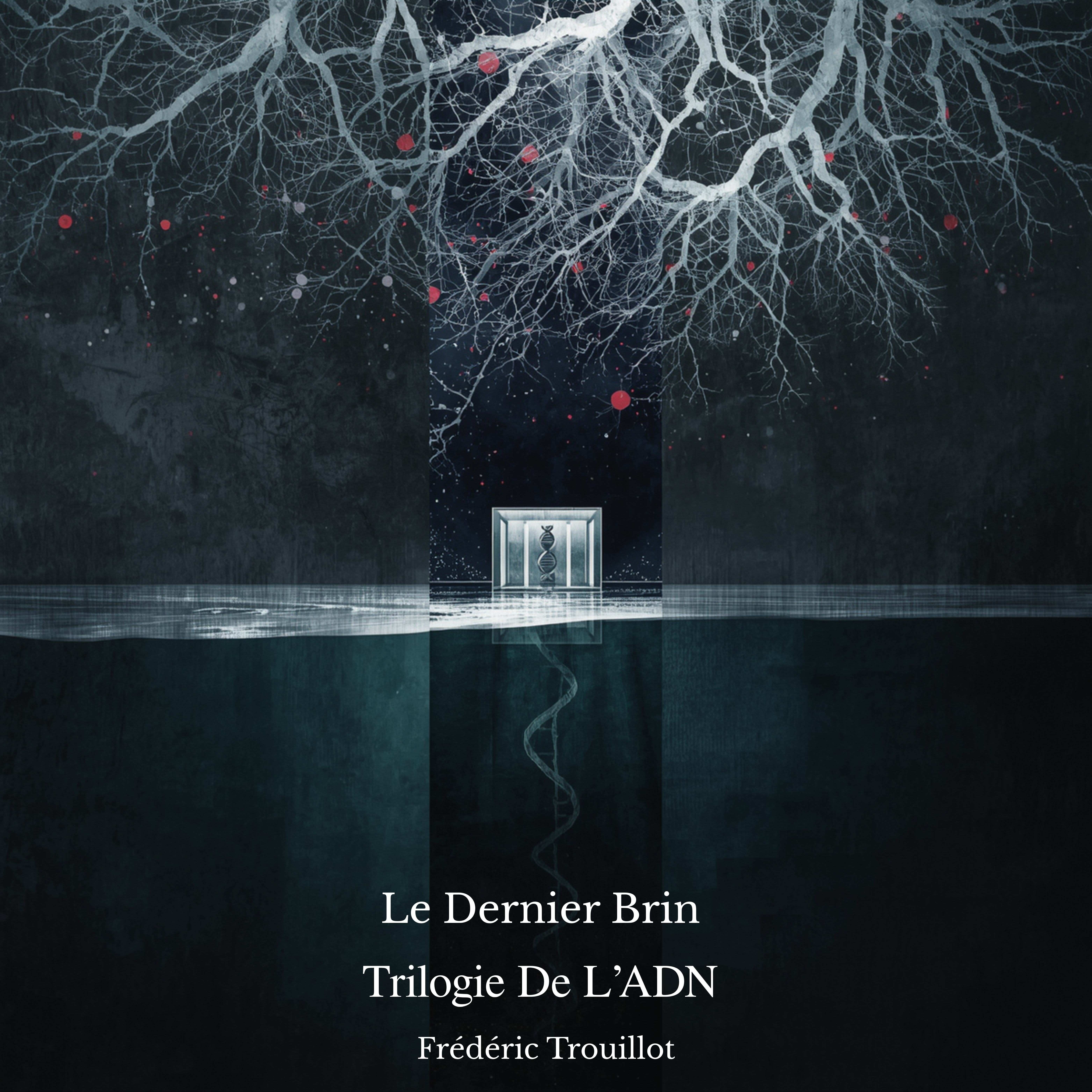
Le Dernier Brin — Book III
2061. Vancouver. The last laboratory still lit in a city that is emptying. Élise Langstone. Thomas, her brother, who perceives the planetary mycelial network with a clarity that looks less and less like observation. And Nadia Vasic, arrived from Montreal with a broken wheeled suitcase and GEN-X , a genetic synthesis built in three years, perhaps the last chance.
Le Dernier Brin is the story of those who arrive when it has already begun, and who work all the same, with all the care and all the honesty they can.
The trilogy that began on a Chilean beach one hundred and twenty-eight thousand years ago closes here. Not with an ending. With something that goes on in a direction the children of their children will consider normal.
It is enough. That is what enough means.